Whooping Crane
Grus americana
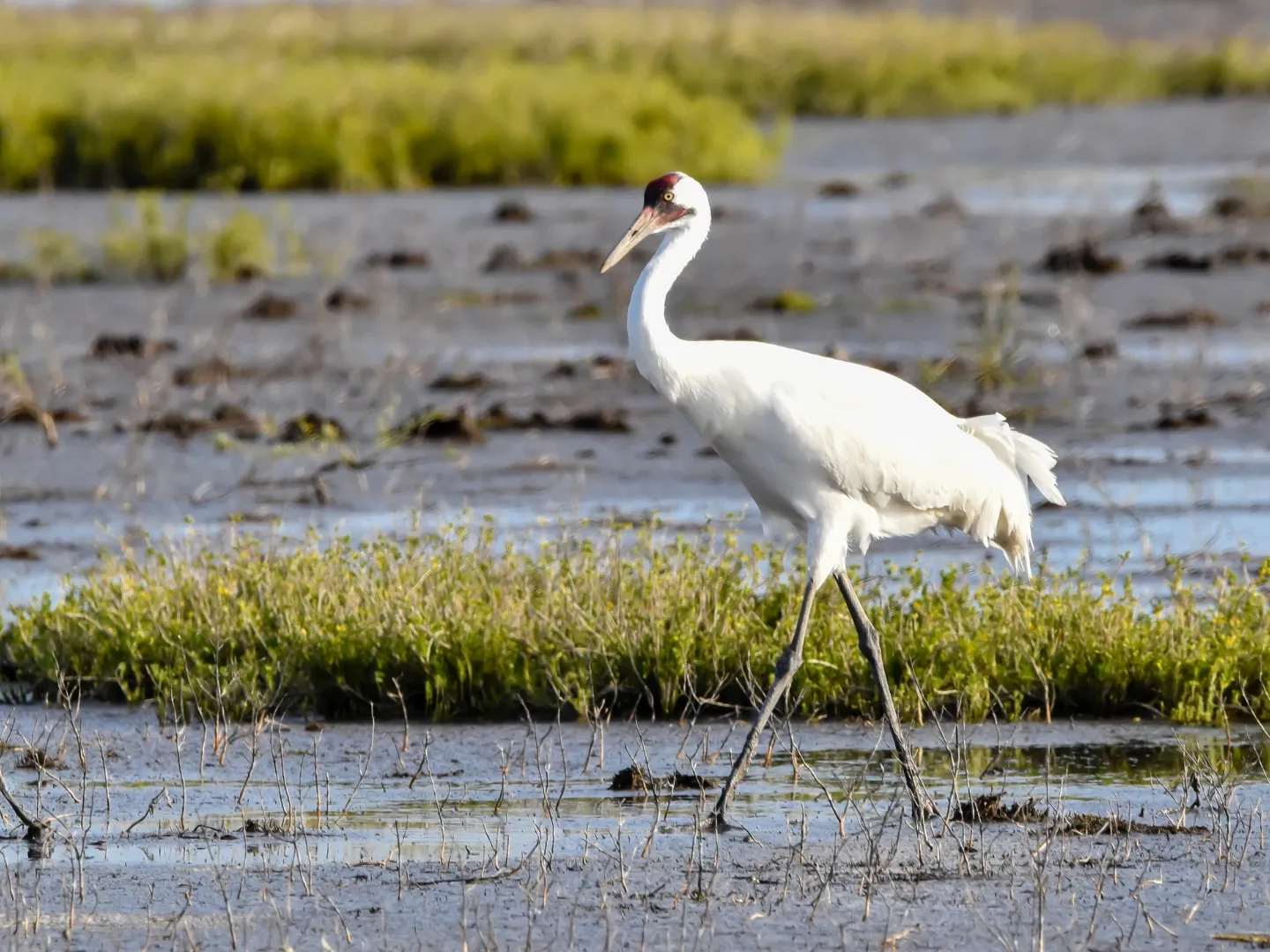
The whooping crane is the tallest bird in North America, known for its trumpet-like call and long migration. After dropping to just a few dozen birds, the species is recovering slowly but remains endangered.
Conservation Status
Species Data
Student Research1.5 m
Height
2.3 m
Wingspan
21
Wild cranes in 1941
30+ yrs
Typical lifespan
What Makes the Whooping Crane Unique
Traits and behaviors that define this species.
Tallest North American bird
Distinctive white plumage with black wingtips.
Long-distance migration
Travels between Canada and Texas annually.
Life-long bonds
Forms strong pair bonds and mates for life.
Signature call
The "whoop" can be heard over long distances.
Diet & Feeding
Primary food sources and foraging behaviors tailored to their environment.
Omnivorous diet
Eat insects, invertebrates, fish, and plants.
Wetland foragers
Probe shallow water and grasslands for food.
Seasonal flexibility
Diet shifts with wetland conditions.
Habitat & Range
Whooping cranes depend on large wetlands and grasslands across their migration route.
Breeding grounds
Wood Buffalo National Park in northern Canada.
Wintering grounds
Coastal wetlands of Texas.
Migration stopovers
Central North American wetlands are essential.
Water-dependent habitat
Wetland health determines nesting success.
Geographic Distribution
Historical vs. current territory mapping.
Historical Decline
Whooping cranes nearly vanished due to habitat loss and hunting.
Wetland drainage
Large wetland losses reduced breeding habitat.
Unregulated hunting
Populations dropped dramatically in the early 1900s.
Near extinction
Only 21 cranes remained in 1941.
Recovery efforts
Intensive programs slowly rebuilt numbers.
Why This Species Is Endangered
Primary threats and pressure points.
Wetland loss
Development and water diversion reduce habitat.
Power line collisions
A major threat during migration.
Climate change
Alters water availability and nesting success.
Small population
Vulnerable to disease and extreme events.
Why Whooping Crane Matters
The ecological role and why conservation matters.
Cranes signal the health of wetland ecosystems.
Protecting cranes also protects many species.
A flagship species for North American conservation.
What Can Be Done
Actions that support conservation and awareness.
Support conservation of marshes and grasslands.
Back power line marking and safe infrastructure.
Healthy wetlands need reliable water.
Awareness builds public support.
Conservation & Recovery
Status, efforts, and organizations protecting this species.
Current Status
Whooping cranes remain endangered and rely on continued habitat protection and monitoring.
Recovery Efforts
Habitat protection
Safeguard breeding and wintering wetlands.
Captive breeding
Supports reintroduction and population growth.
Power line marking
Reduces collision risk along migration routes.
International cooperation
Cross-border conservation keeps migration safe.
Organizations Protecting Whooping Crane
U.S. Fish and Wildlife Service
Coordinates recovery efforts in the U.S.
Environment and Climate Change Canada
Protects cranes and critical habitat in Canada.
International Crane Foundation
Leads global crane conservation research.
Parks Canada
Protects breeding habitat in national parks.
Metro Prep students research whooping cranes and contribute to the Wild, Not Gone book, learning how habitat protection and cooperation aid recovery.