Red Wolf
Canis rufus
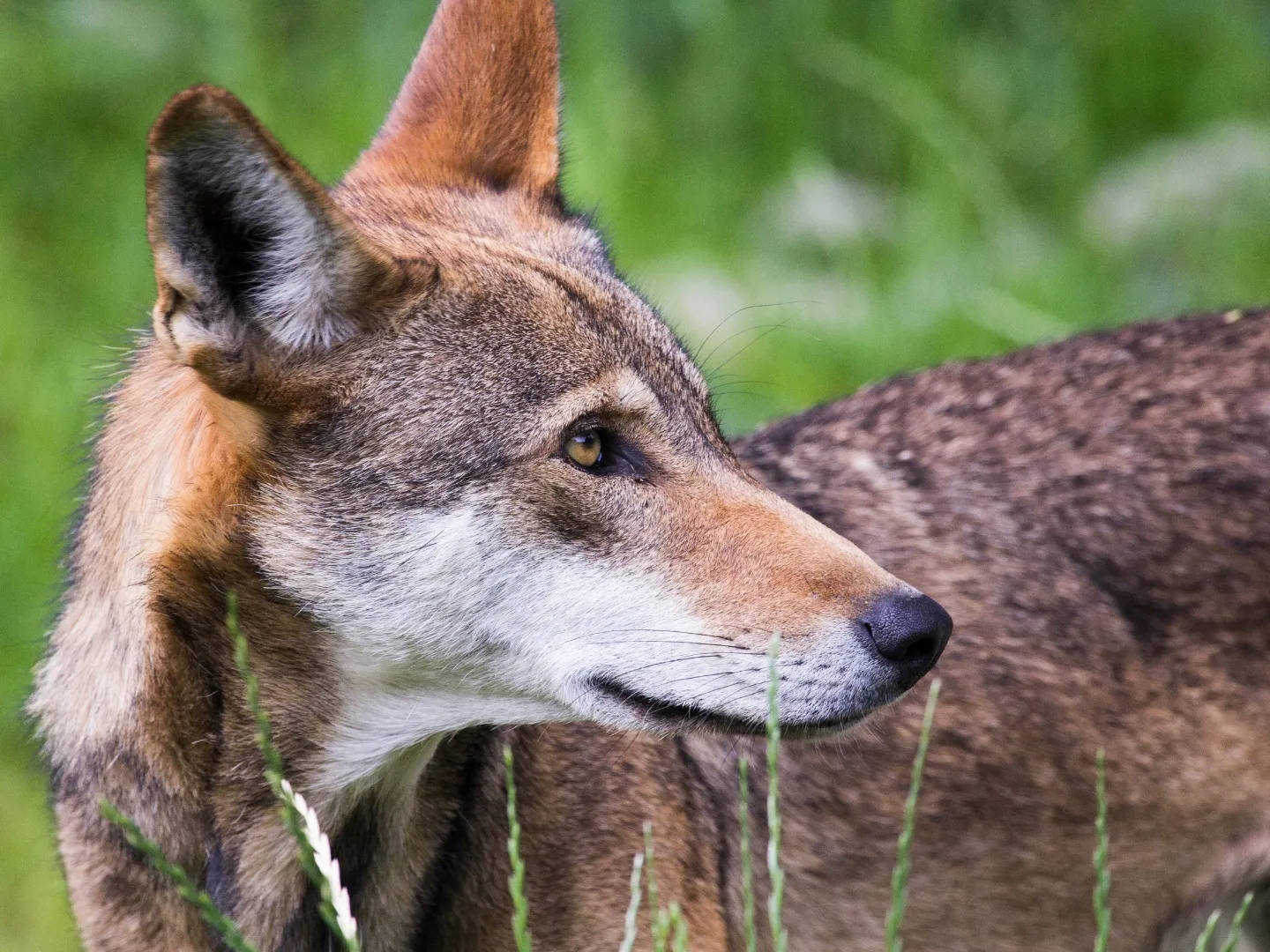
The red wolf is one of the rarest canids in the world and the only wolf species native to the southeastern United States. After extinction in the wild, recovery now depends on captive breeding and a small reintroduced population.
Conservation Status
Species Data
Student Research1
Wild population
Eastern North Carolina
1980
Declared extinct in the wild
Critically
Endangered status
Family
Pack structure
What Makes the Red Wolf Unique
Traits and behaviors that define this species.
Distinct canid
Genetically unique from gray wolves and coyotes.
Wetland specialist
Adapted to forests, wetlands, and coastal plains.
Family groups
Live in packs led by a breeding pair.
Mid-sized apex
Plays a vital predator role in its ecosystem.
Diet & Feeding
Primary food sources and foraging behaviors tailored to their environment.
Medium-sized prey
Feed on white-tailed deer, raccoons, and rabbits.
Rodent control
Also hunt smaller mammals and rodents.
Ecosystem balance
Predation helps regulate prey populations.
Habitat & Range
Red wolves once ranged across the southeastern United States.
Historic range
From Texas to the Atlantic coast.
Current stronghold
Experimental wild population in eastern North Carolina.
Connected landscapes
Low road density and large territories are essential.
Captive facilities
Most red wolves live in managed breeding centers.
Geographic Distribution
Historical vs. current territory mapping.
Historical Decline
Red wolves were driven to extinction in the wild by the late 20th century.
Predator control
Hunting and control programs reduced numbers.
Habitat loss
Development fragmented remaining range.
Hybridization
Coyote interbreeding increased as wolf numbers fell.
Extinction in the wild
By 1980, red wolves survived only in captivity.
Why This Species Is Endangered
Primary threats and pressure points.
Human-caused mortality
Vehicle collisions and shootings remain threats.
Habitat fragmentation
Limited space restricts dispersal and recovery.
Hybridization
Breeding with coyotes threatens genetic integrity.
Small population
Low numbers increase vulnerability to disease.
Why Red Wolf Matters
The ecological role and why conservation matters.
Maintains balance in southeastern ecosystems.
Healthy predator populations promote ecological diversity.
An irreplaceable part of North America's wildlife.
What Can Be Done
Actions that support conservation and awareness.
Back science-based red wolf conservation.
Advocate for safe habitat and protections.
Keep large, connected landscapes intact.
Understanding predators helps long-term recovery.
Conservation & Recovery
Status, efforts, and organizations protecting this species.
Current Status
Red wolves are critically endangered, with most individuals living in captive breeding programs and only a tiny wild population.
Recovery Efforts
Captive breeding
Genetic management preserves a lifeline population.
Reintroduction
Programs maintain a small wild population.
Hybridization control
Efforts reduce coyote interbreeding.
Public education
Outreach builds coexistence and support.
Organizations Protecting Red Wolf
U.S. Fish and Wildlife Service
Leads red wolf recovery planning and management.
Point Defiance Zoo & Aquarium
Participates in the Red Wolf Species Survival Plan.
Red Wolf Coalition
Focuses on education and outreach for red wolves.
Association of Zoos and Aquariums
Coordinates accredited breeding programs.
Metro Prep students research red wolves and write for the Wild, Not Gone book, learning how science, policy, and public attitudes shape conservation outcomes.