Piping Plover
Charadrius melodus
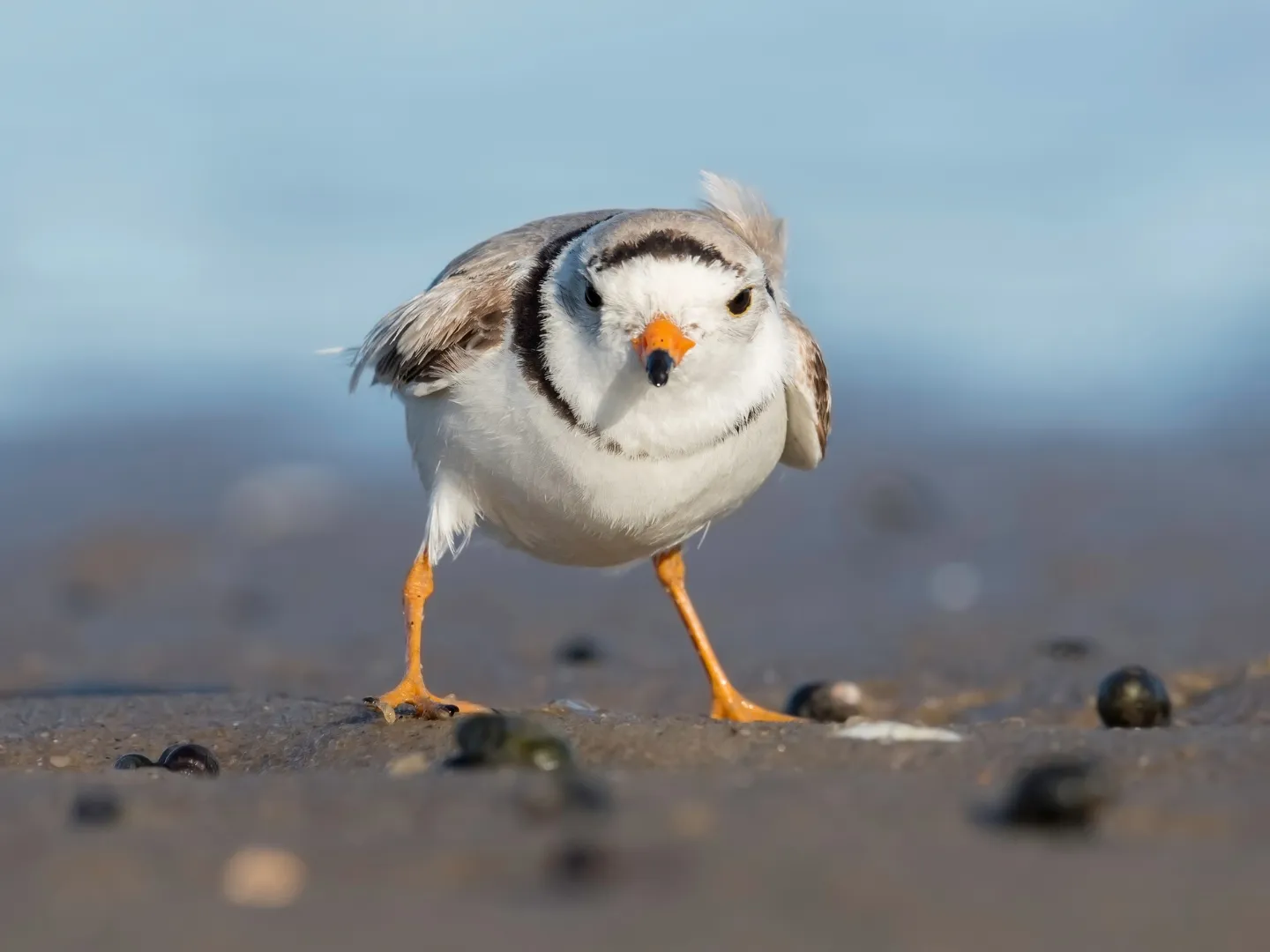
The piping plover is a small, pale shorebird that nests on open sand along coasts and inland shorelines. Because its habitat overlaps with busy human beaches, this resilient bird remains one of North America's most vulnerable species.
Conservation Status
Species Data
Student Research3
Regional populations
Atlantic, Great Lakes, Great Plains
Ground nest
Nesting style
Coast + inland
Habitat range
Migratory
Seasonal travel
What Makes the Piping Plover Unique
Traits and behaviors that define this species.
Beach camouflaged
Sand-colored feathers and speckled eggs blend into shorelines.
Ground nesting
Lays eggs directly on open sand and gravel.
Shared parenting
Both adults guard nests and care for chicks.
Disturbance sensitive
Even small disruptions can cause nest failure.
Diet & Feeding
Primary food sources and foraging behaviors tailored to their environment.
Shoreline forager
Feeds on insects and invertebrates exposed by waves.
Crustaceans & worms
Relies on small crustaceans and marine worms.
Quick bursts
Runs, pauses, and pecks along the waterline.
Habitat & Range
Piping plovers depend on wide, open beaches and shorelines with minimal vegetation.
Atlantic coast
Breeding and wintering along sandy coastal beaches.
Great Lakes shores
Endangered population relies on protected lake beaches.
Inland sandbars
Rivers and lake shores provide seasonal habitat.
Migration corridors
Uses coastal routes to reach Gulf and Caribbean wintering grounds.
Geographic Distribution
Historical vs. current territory mapping.
Historical Decline
Plover numbers dropped as shorelines became more developed and crowded.
Coastal development
Housing and infrastructure reduced nesting habitat.
Recreational pressure
Foot traffic and vehicles disturbed nesting sites.
Habitat loss
Fewer undisturbed beaches led to sharp declines.
Why This Species Is Endangered
Primary threats and pressure points.
Habitat loss
Development removes the open sand required for nesting.
Human disturbance
Dogs, crowds, and vehicles can destroy nests.
Predation
Fragmented habitat increases predator pressure.
Climate change
Storms and erosion shrink coastal nesting areas.
Why Piping Plover Matters
The ecological role and why conservation matters.
Healthy plover populations signal healthy beaches.
Conservation safeguards other coastal wildlife.
Protecting nesting space preserves natural beach dynamics.
What Can Be Done
Actions that support conservation and awareness.
Follow fencing and signage during breeding season.
Keep dogs away from protected beaches.
Reduce disturbance on open sand.
Volunteer and advocate for shoreline habitat.
Conservation & Recovery
Status, efforts, and organizations protecting this species.
Current Status
Atlantic Coast populations are threatened, Great Lakes populations are endangered, and Great Plains populations are threatened.
Recovery Efforts
Seasonal closures
Temporary beach protections during breeding season.
Fencing and signage
Clear markers help visitors avoid nests.
Monitoring programs
Track nesting success and population trends.
Public education
Community awareness increases stewardship.
Organizations Protecting Piping Plover
U.S. Fish and Wildlife Service
Coordinates recovery plans and habitat protection.
Environment and Climate Change Canada
Oversees protection of piping plovers in Canada.
National Audubon Society
Supports shorebird conservation and public engagement.
Great Lakes Piping Plover Recovery Program
Leads intensive management for the Great Lakes population.
Metro Prep students research piping plovers and contribute educational writing to the student-created Wild, Not Gone book, learning how shared spaces require shared responsibility.