North Atlantic Right Whale
Eubalaena glacialis
The North Atlantic right whale is one of the rarest large whales on Earth, living along the Atlantic coast of North America. Despite protection from whaling, modern threats like shipping and fishing gear continue to drive the population downward.
Conservation Status
Species Data
Student Research16 m
Maximum length
70 tonnes
Maximum weight
<350
Individuals left
<70
Breeding females
What Makes the North Atlantic Right Whale Unique
Traits and behaviors that define this species.
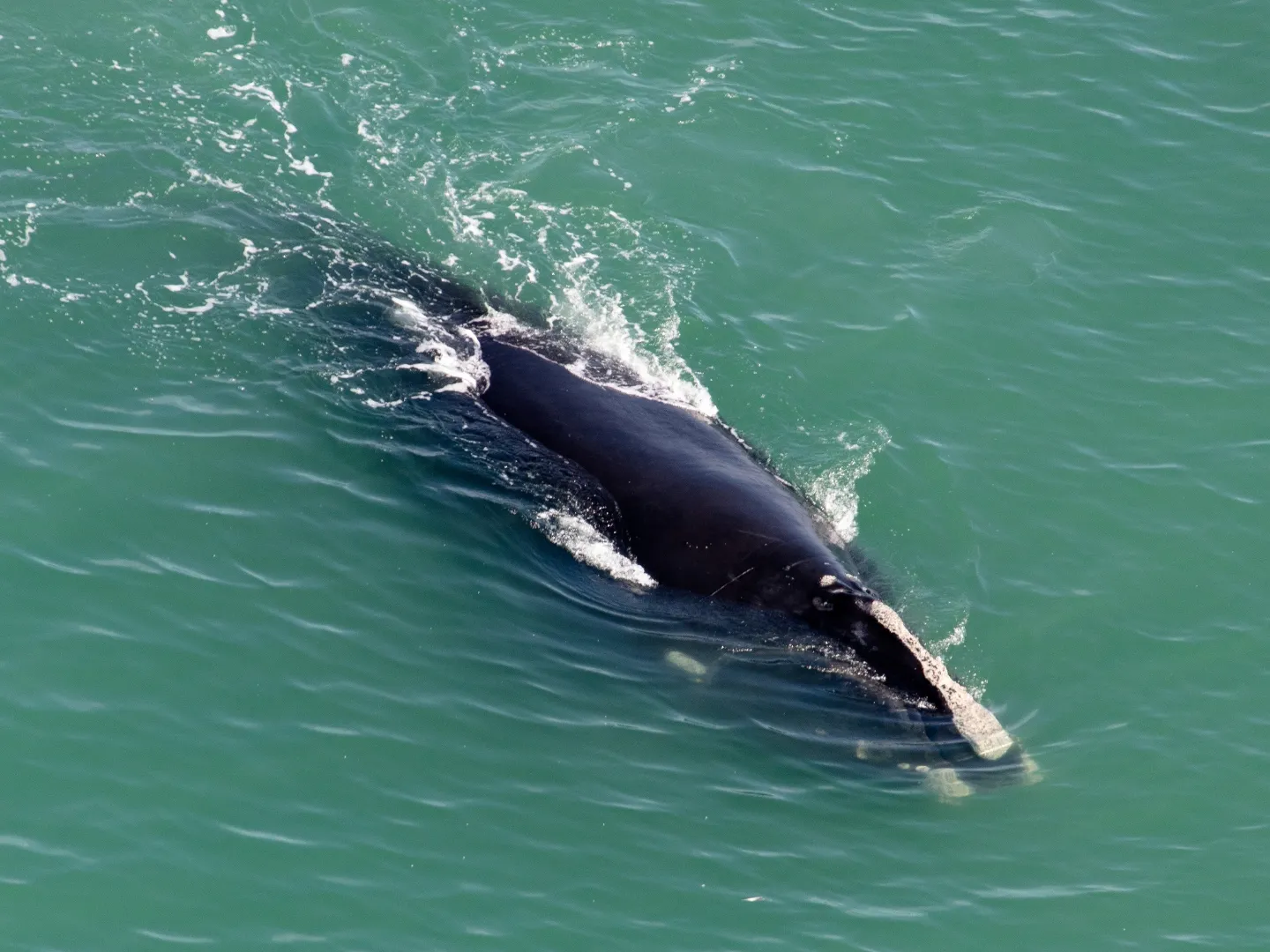
Callosity patterns
Rough white patches on the head identify individuals.
No dorsal fin
Smooth backs make them easy to recognize.
Slow swimmers
Often stay near the surface, increasing collision risk.
Low reproduction
Females give birth only every 3-10 years.
Diet & Feeding
Primary food sources and foraging behaviors tailored to their environment.
Zooplankton specialists
Feed almost exclusively on copepods.
Baleen filtration
Filter enormous volumes of water for tiny prey.
Climate-sensitive feeding
Food distribution shifts with ocean warming.
Habitat & Range
Right whales inhabit coastal and offshore waters along the eastern edge of North America.
Calving grounds
Coastal waters of the southeastern United States.
Feeding grounds
Gulf of Maine, Bay of Fundy, and Atlantic Canada.
Migration corridors
Routes overlap major shipping lanes.
Changing food zones
Shifting plankton due to climate change affects feeding.
Geographic Distribution
Historical vs. current territory mapping.
Historical Decline
Centuries of whaling nearly wiped out right whales.
Whaling era
Targeted because they floated after death and were slow.
Near extinction
Commercial whaling reduced numbers to a few survivors.
Slow recovery
Modern threats have stalled population growth.
Why This Species Is Endangered
Primary threats and pressure points.
Ship strikes
Collisions are often fatal due to slow movement.
Fishing gear entanglement
Ropes and nets cause injury and stress.
Climate change
Shifts plankton distribution and feeding success.
Noise pollution
Interferes with communication and navigation.
Why North Atlantic Right Whale Matters
The ecological role and why conservation matters.
Population trends reflect marine ecosystem stability.
Waste products help fertilize ocean food webs.
Large whales support biodiversity across seas.
What Can Be Done
Actions that support conservation and awareness.
Compliance saves whales in busy corridors.
Support gear reforms that reduce entanglement.
Limit disturbances in critical habitats.
Public awareness keeps protections strong.
Conservation & Recovery
Status, efforts, and organizations protecting this species.
Current Status
Fewer than 350 individuals remain, including fewer than 70 breeding females. Recent years have seen continued population decline.
Recovery Efforts
Speed restrictions
Mandatory slow zones reduce collision risk.
Safer fishing gear
Modified gear reduces entanglements.
Monitoring and tracking
Aerial and acoustic surveys follow whale movements.
Rescue response
Teams respond quickly to entangled whales.
Organizations Protecting North Atlantic Right Whale
NOAA
Leads U.S. protection and recovery planning.
Fisheries and Oceans Canada
Coordinates conservation in Canadian waters.
New England Aquarium
Conducts long-term research and monitoring.
Whale and Dolphin Conservation
Advocates globally for whale protection.
Metro Prep students research right whales and write for the Wild, Not Gone book, learning how science, policy, and human behavior intersect in marine conservation.