Eastern Massasauga Snake
Sistrurus catenatus
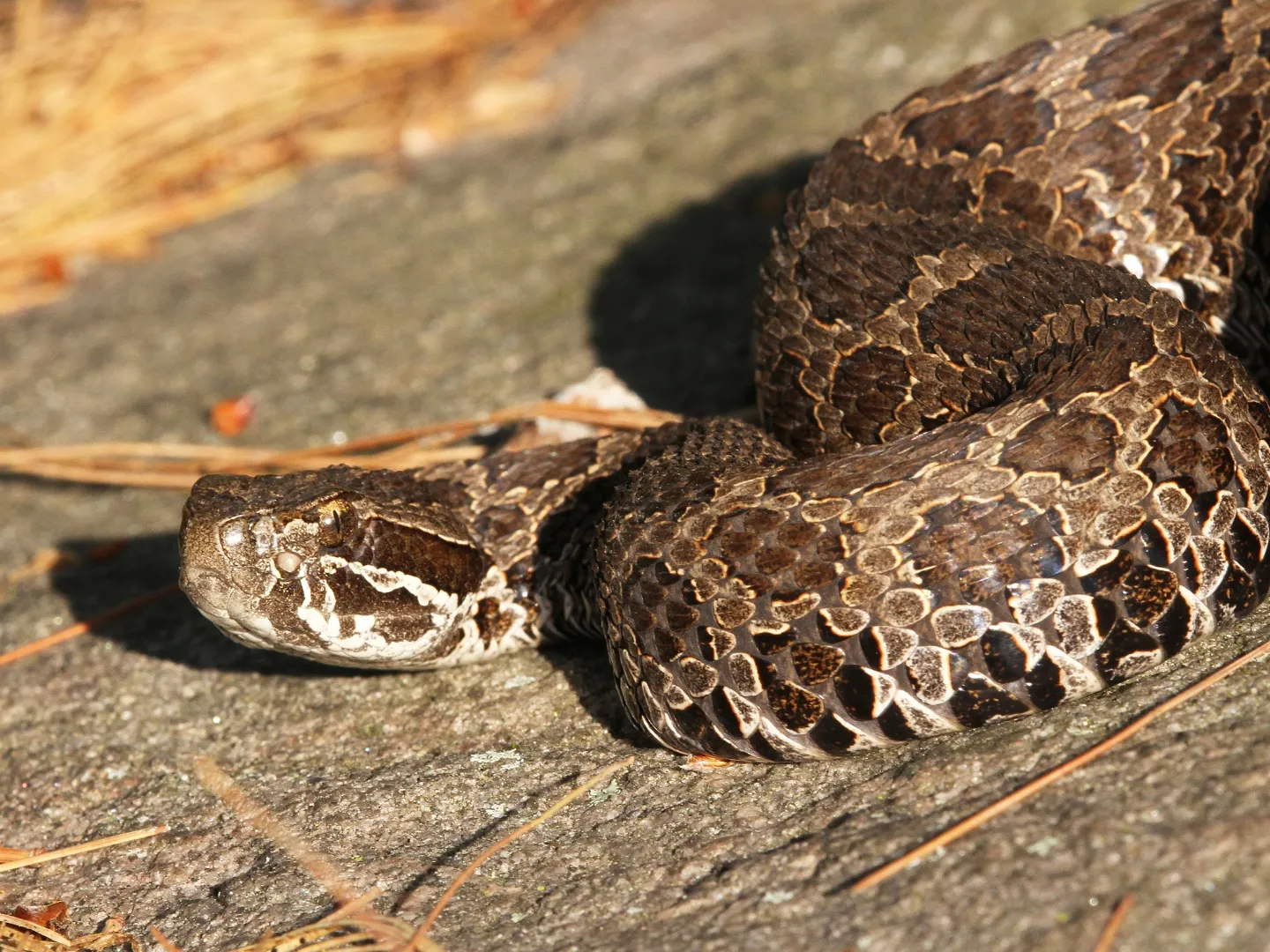
The eastern massasauga is a small, shy rattlesnake that lives in wetland and grassland habitats of central and eastern North America. Misunderstanding and habitat loss have made it one of the most endangered snakes on the continent.
Conservation Status
Species Data
Student ResearchSmall
Rattlesnake size
Quiet rattle
Low warning sound
Live birth
Not egg-laying
Great Lakes
Core range
What Makes the Eastern Massasauga Snake Unique
Traits and behaviors that define this species.
Small rattlesnake
One of North America's smallest rattlesnakes.
Subtle rattle
Rattle is often faint or quiet.
Camouflage expert
Blends into grasses and wetlands.
Non-aggressive
Prefers to avoid confrontation.
Live-bearing
Gives birth to live young rather than eggs.
Diet & Feeding
Primary food sources and foraging behaviors tailored to their environment.
Small mammals
Feeds primarily on mice and voles.
Amphibians
Also eats frogs and other amphibians.
Rodent control
Helps regulate small mammal populations.
Habitat & Range
Eastern massasaugas depend on wetland-associated habitats with nearby uplands.
Wet meadows and marshes
Core habitat for hunting and shelter.
Prairie remnants
Uses grasslands and open areas near water.
Great Lakes region
Strongholds in Ontario and the Midwest.
Habitat mosaic
Needs wetlands, uplands, and undisturbed grasslands.
Geographic Distribution
Historical vs. current territory mapping.
Historical Decline
Massasauga populations declined as wetlands disappeared.
Wetland drainage
Loss of marshes reduced habitat.
Agricultural expansion
Grasslands converted to farmland.
Urban development
Fragmented remaining populations.
Fear-based killing
Persecution accelerated declines.
Why This Species Is Endangered
Primary threats and pressure points.
Habitat loss
Wetlands and grasslands continue to disappear.
Persecution
Fear leads to intentional killing.
Road mortality
Roads fragment habitats and increase deaths.
Small populations
Isolated groups reduce genetic diversity.
Human recreation
Disturbance impacts remaining habitats.
Why Eastern Massasauga Snake Matters
The ecological role and why conservation matters.
Declines signal broader habitat loss.
Predation supports balanced ecosystems.
Protecting snakes protects wetland communities.
What Can Be Done
Actions that support conservation and awareness.
Protect marshes, swamps, and wet meadows.
Avoid disturbance in sensitive areas.
Knowing snakes reduces fear and conflict.
Back habitat-focused land management.
Conservation & Recovery
Status, efforts, and organizations protecting this species.
Current Status
Eastern massasaugas are endangered in Canada and threatened in many U.S. states, making them one of North America's most at-risk snakes.
Recovery Efforts
Habitat protection
Safeguards wetlands and grasslands.
Public education
Reduces fear and misinformation.
Monitoring programs
Tracks populations and habitat health.
Road mitigation
Planning reduces road impacts on habitat.
Organizations Protecting Eastern Massasauga Snake
Environment and Climate Change Canada
Oversees protection and recovery planning in Canada.
Ontario Ministry of Natural Resources and Forestry
Supports habitat management and public education.
U.S. Fish and Wildlife Service
Coordinates protections across the U.S. range.
Partners in Amphibian and Reptile Conservation
Supports research and education for reptiles.
Metro Prep students research eastern massasaugas and contribute to the Wild, Not Gone book, learning how public perception and habitat protection shape conservation outcomes.