Black-Footed Ferret
Mustela nigripes
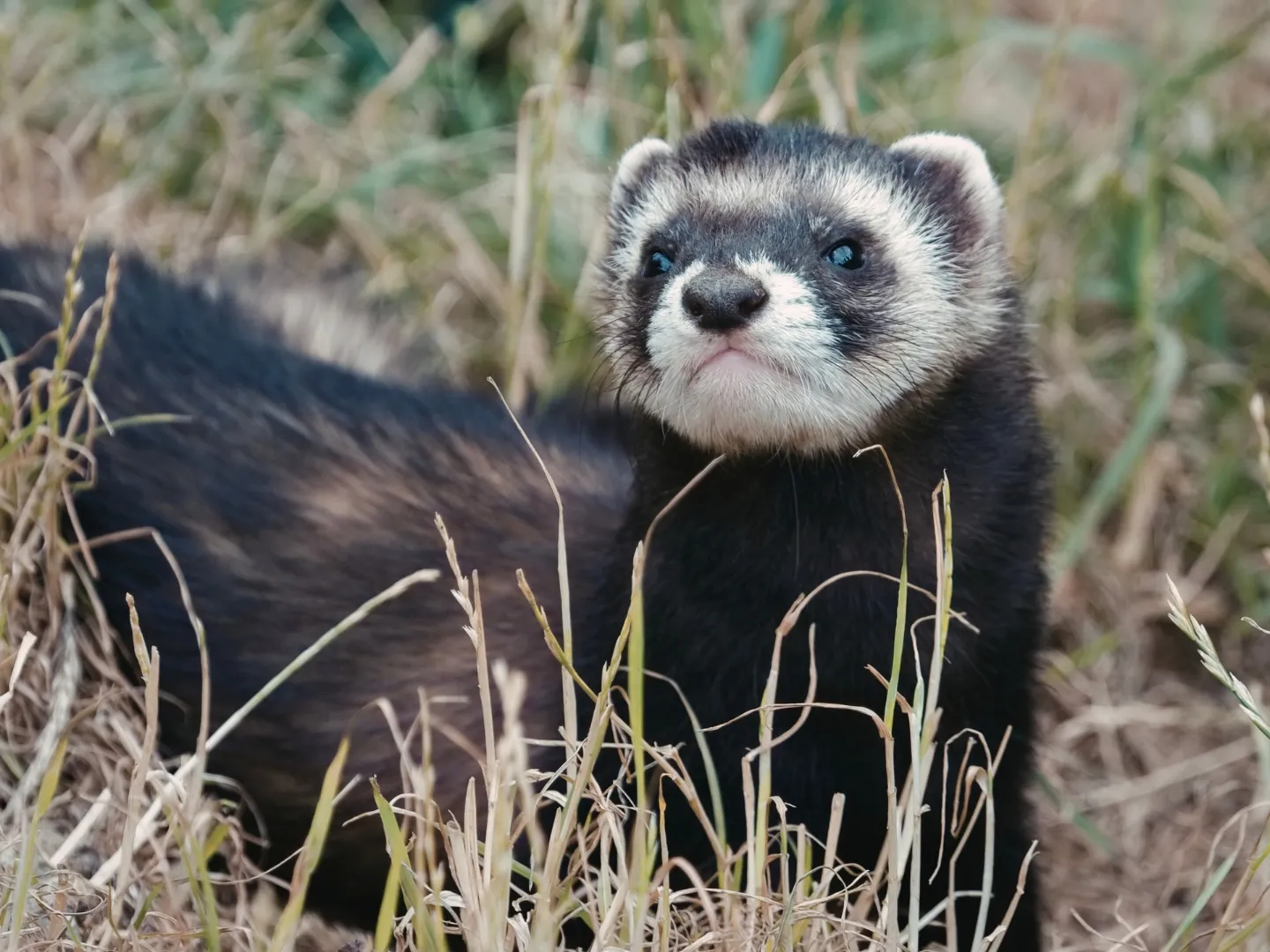
The black-footed ferret is a rare prairie predator whose survival depends on prairie dog colonies. Once thought extinct, it now survives through careful breeding and reintroduction programs.
Conservation Status
Species Data
Student Research90%+
Diet from prairie dogs
7
Founders of all wild ferrets
Nocturnal
Primary activity
Great Plains
Historic range
What Makes the Black-Footed Ferret Unique
Traits and behaviors that define this species.
Prairie dog specialist
Relies on prairie dogs for food and shelter.
Underground living
Uses abandoned prairie dog burrows.
Nocturnal hunter
Rarely seen above ground in daylight.
Ecosystem indicator
Ferret presence signals healthy prairie colonies.
Diet & Feeding
Primary food sources and foraging behaviors tailored to their environment.
Prairie dog prey
Over 90% of diet comes from prairie dogs.
Burrow hunters
Hunt underground within prairie dog tunnels.
Vulnerable link
Any prairie dog decline rapidly affects ferrets.
Habitat & Range
Black-footed ferrets require large, connected prairie dog colonies.
Great Plains heritage
Historically ranged from Canada to Mexico.
Reintroduction sites
Now limited to managed sites in the U.S.
Prairie grasslands
Depend on intact prairie ecosystems.
Connected colonies
Large prairie dog towns are essential for survival.
Geographic Distribution
Historical vs. current territory mapping.
Historical Decline
Ferret populations collapsed in the 20th century.
Prairie dog eradication
Control programs removed their primary prey.
Habitat conversion
Grasslands converted to agriculture.
Disease outbreaks
Sylvatic plague devastated colonies.
Rediscovery
A small population found in Wyoming in the 1980s.
Why This Species Is Endangered
Primary threats and pressure points.
Prairie dog loss
Habitat destruction and control programs reduce prey.
Sylvatic plague
Disease affects both prairie dogs and ferrets.
Fragmented habitat
Isolated colonies limit recovery.
Small population
Low numbers increase vulnerability.
Why Black-Footed Ferret Matters
The ecological role and why conservation matters.
Protecting ferrets helps protect prairie habitats.
Prairie ecosystems host countless grassland species.
Predators keep prairie food webs stable.
What Can Be Done
Actions that support conservation and awareness.
Protect and restore grasslands and prairie dog towns.
Healthy prey populations sustain ferrets.
Back vaccination and monitoring programs.
Understanding grasslands builds awareness.
Conservation & Recovery
Status, efforts, and organizations protecting this species.
Current Status
Black-footed ferrets are endangered, and all wild ferrets descend from just seven founders.
Recovery Efforts
Captive breeding
Conservation centers raise ferrets for release.
Reintroduction
Releases into protected prairie habitats.
Disease management
Vaccination and monitoring reduce plague impacts.
Ongoing research
Population tracking guides recovery.
Organizations Protecting Black-Footed Ferret
U.S. Fish and Wildlife Service
Leads the national Black-Footed Ferret Recovery Program.
National Black-Footed Ferret Conservation Center
Operates captive breeding and research programs.
Defenders of Wildlife
Supports prairie protection and ferret recovery.
Prairie Wildlife Research
Contributes monitoring and prairie ecosystem research.
Metro Prep students research black-footed ferrets and contribute writing to the Wild, Not Gone book, learning how ecosystem connections shape species survival.